ACTIVITIES IN LITUANIA
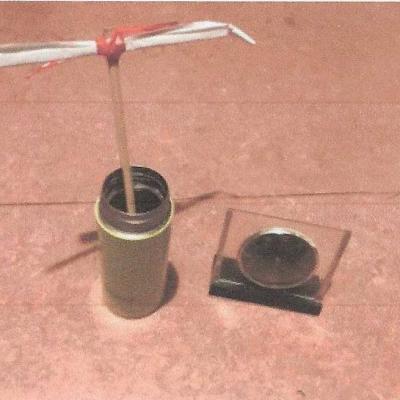
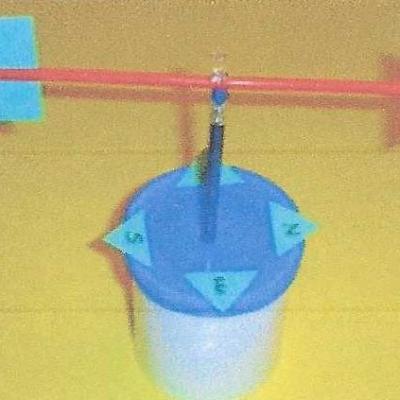
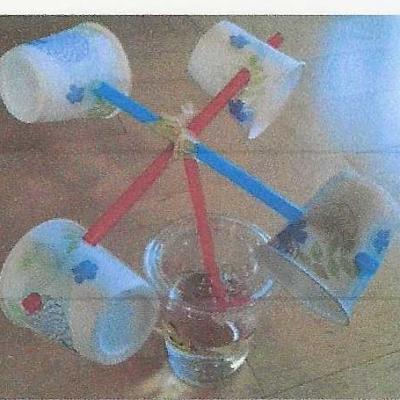
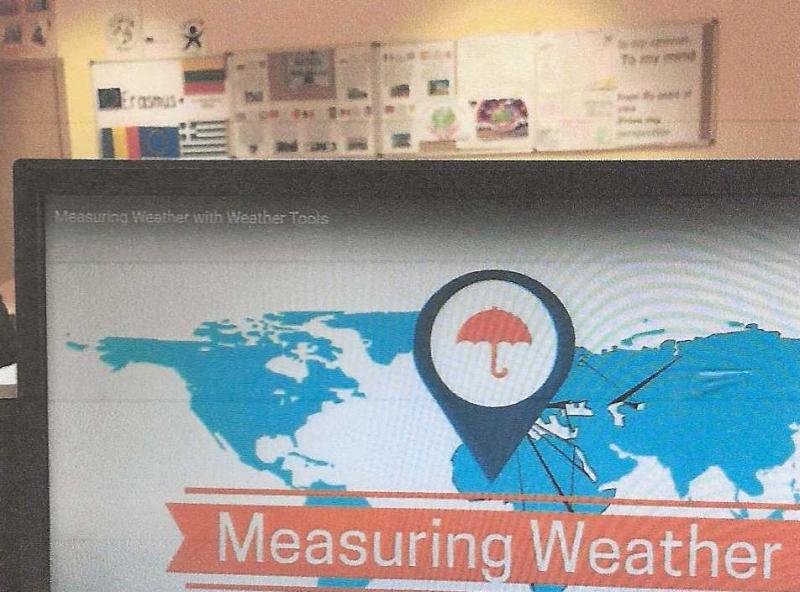
TOOLS FOR METEOROLOGY

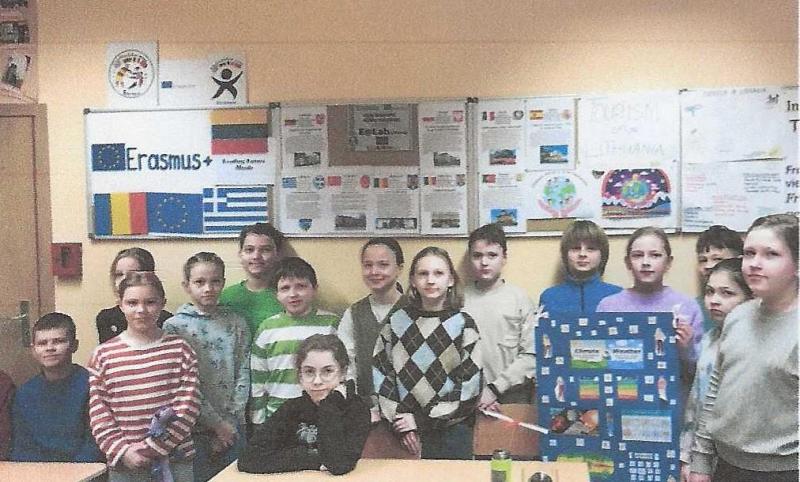
OUR POSTER
|
SCHOOL : LITHUANIA |
|
|
To be done |
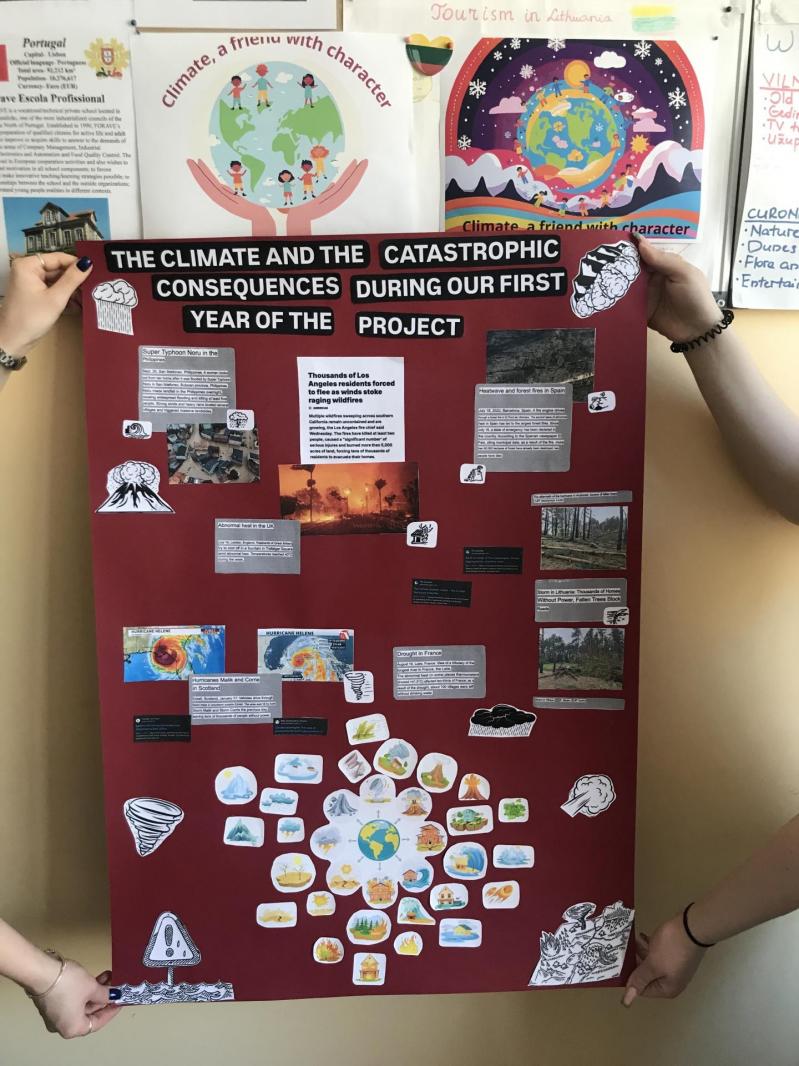
"THE CLIMATE AND THE CATASTROPHIC CONSEQUENCES DURING OUR FIRST YEAR OF THE PROJECT" |
|
|
The Poster was done by teacher Skaste Sadauninkaite, Armen Barsamyan and students of 4 and 7 grades.
|
|
|
|
|
|
|
ROLE & INFLUENCE OF THE OCEANS ON THE CLIMATE
|
Rôle et influence des océans sur le climat Rôle and influence of the oceans on the climate
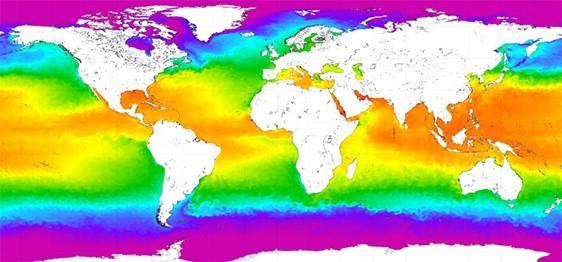
How does the ocean affect climate and weather on land? The ocean influences weather and climate by storing solar radiation, distributing heat and moisture around the globe, and driving weather systems.
One way that the world’s ocean affects weather and climate is by playing an important role in keeping our planet warm. The majority of radiation from the Sun is absorbed by the ocean, particularly in tropical waters around the equator, where the ocean acts like a massive, heat-retaining solar panel. Land areas also absorb some sunlight, and the atmosphere helps to retain heat that would otherwise quickly radiate into space after sunset.
The ocean doesn't just store solar radiation — it also helps to distribute heat around the globe. When water molecules are heated, they exchange freely with the air in a process called evaporation. Ocean water is constantly evaporating, increasing the temperature and humidity of the surrounding air to form rain and storms that are then carried by trade winds. In fact, almost all rain that falls on land starts off in the ocean. The tropics are particularly rainy because heat absorption, and thus ocean evaporation, is highest in this area.
Outside of Earth’s equatorial areas, weather patterns are driven largely by ocean currents. Currents are movements of ocean water in a continuous flow, created largely by surface winds but also partly by temperature and salinity gradients, Earth’s rotation, and tides. Major current systems typically flow clockwise in the northern hemisphere and counterclockwise in the southern hemisphere, in circular patterns that often trace the coastlines.
Ocean currents act much like a conveyor belt, transporting warm water and precipitation from the equator toward the poles and cold water from the poles back to the tropics. Thus, ocean currents regulate global climate, helping to counteract the uneven distribution of solar radiation reaching Earth’s surface. Without currents in the ocean, regional temperatures would be more extreme — super hot at the equator and frigid toward the poles — and much less of Earth’s land would be habitable.
https://www.youtube.com/watch?v=zO2153cJORI
|
A song or poem related to the mountain
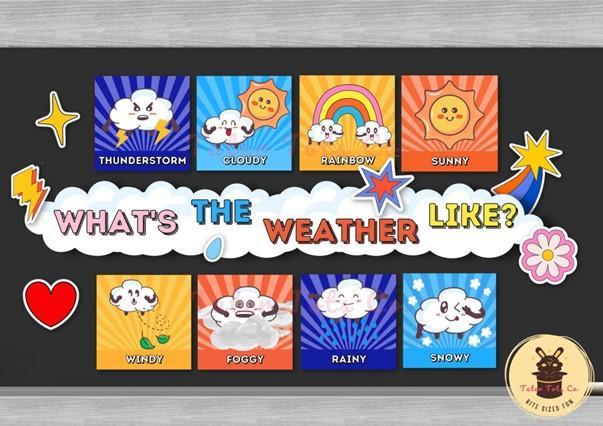
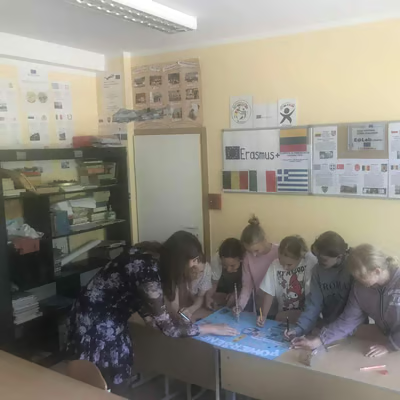
Handicraft: A board representing a variety of climates
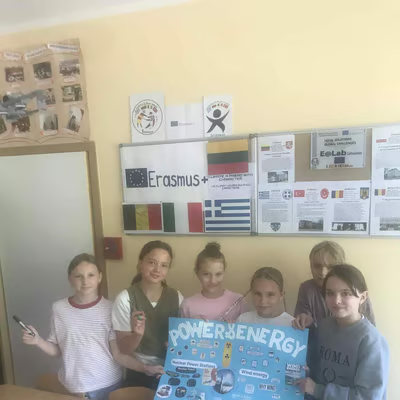
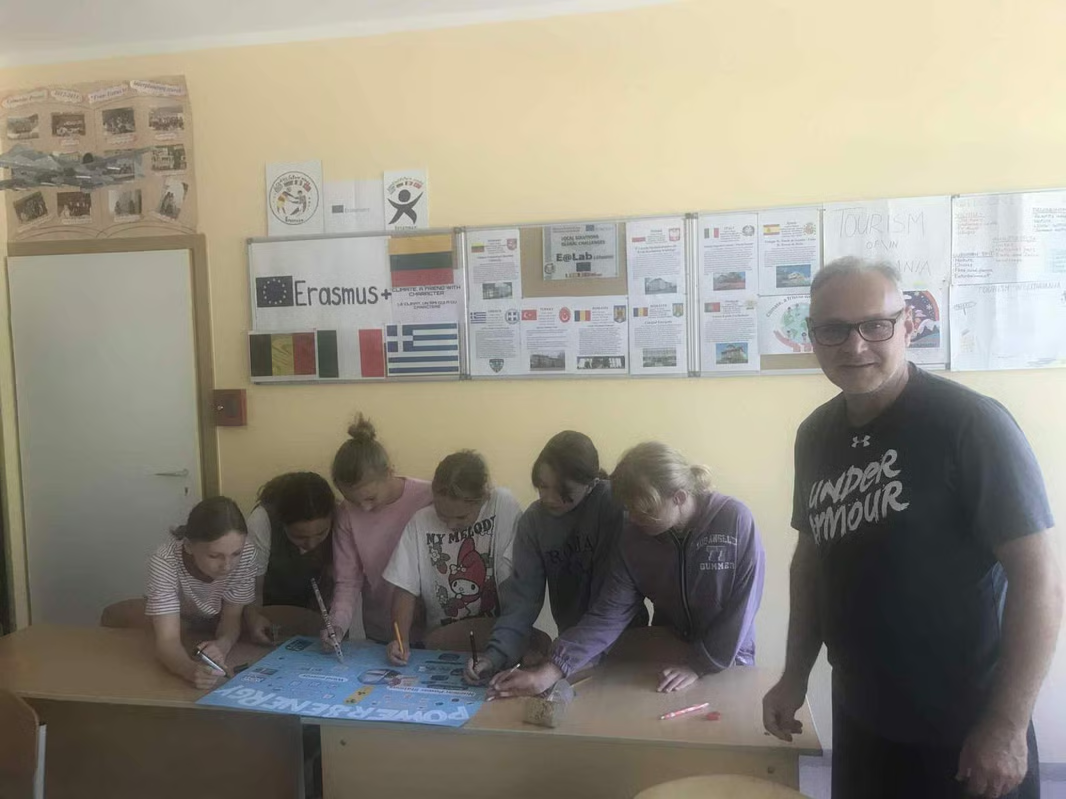
NUCLEAR POWER STATIONS
|
Name of the school : Vilniaus P. Skorinos gimnazija |
|
|
Responsible person(s) for this activity |
SKAISTE SADAUNINKAITE |
|
Other person involved in the activity |
ARMEN BARSAMYAN |
|
Number of students concerned |
24 |
|
Dates of the activity (beginning & end) |
September 2025
|
|
What were the objectives of the activity?
|
The main objective of this activity was to help my pupils understand the importance and global influence of the Nuclear Power Stations. I wanted them to explore how it affect the planet's climate, wildlife, and even human activity. I also aimed to encourage curiosity about remote parts of the world, and to build awareness of environmental issues such as green energy. |
|
Have the objectives been met? |
Yes |
|
Explain how you have worked.
|
To get ready, I gathered a variety of resources—videos, maps, articles, and images—to make the topic more engaging and accessible. I read up on recent news about Nuclear Power Stations , so I could share up-to-date information. I prepared a presentation with interesting facts and information about them and discussion questions to keep the activity interactive. Finally, I created a presentation to present the advantages and disadvantages of Nuclear Power Stations
|
|
Explain the work done by the students
|
The pupils learned about the Nuclear Power Stations , its advantages, danger and disadvantages. They also discovered how the Nuclear Power Stations a big role in balancing the Earth’s temperature and how climate change is affecting both regions. Many pupils were surprised to learn how energy plants can impact sea levels around the world. Some even expressed concern and interest in doing more to help the environment. Overall, they were engaged and asked thoughtful questions, showing that the topic really sparked their interest. |
|
What has been the final result ?
|
By the end of the activity, the pupils were able to explain what is Nuclear Power Stations. A few groups even added their own ideas about how we can help stop climate change, which showed that they were making meaningful connections.
Overall, the results showed that the pupils not only learned the facts but also became more curious and concerned about the world around them. The activity helped turn a faraway topic into something real and relevant to them. |
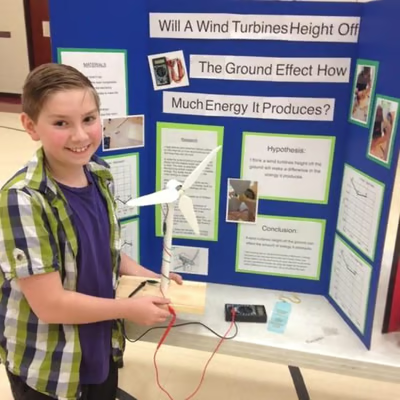
WIND ENERGY
Attachments : link to the presentation https://www.slideshare.net/slideshow/wind-power-presentation-46038188/46038188
https://www.slideshare.net/slideshow/wind-energy-249494887/249494887
|
Name of the school : Vilniaus P. Skorinos gimnazija |
|
|
Responsible person(s) for this activity |
SKAISTE SADAUNINKAITE |
|
Other person involved in the activity Autre personne impliquée dans l’activité |
ARMEN BARSAMYAN |
|
Person outside the school involved in the activity Personne extérieure à l’école impliquée dans l’activité |
|
|
Class(es) of students concerned Classe concernée |
5 |
|
Number of students concerned Nombre d’élèves concernés |
25 |
|
Dates of the activity (beginning & end) |
September
|
|
What were the objectives of the activity? Quesl sont les objectifs de cette acxtivité ? |
The main objective of this activity was to help my pupils understand the importance and global influence of the Wind energy . I wanted them to explore how it affect the planet's climate, wildlife, and even human activity. I also aimed to encourage curiosity about remote parts of the world, and to build awareness of environmental issues such as green energy. |
|
Have the objectives been met? Avez-vous atteint ces objectifs ? |
Yes |
|
If your answer is no, why haven't you achieved your objectives? |
|
|
Explain how you have worked. Expliquez comment vous avez travaillé. |
To get ready, I gathered a variety of resources—videos, maps, articles, and images—to make the topic more engaging and accessible. I read up on recent news about Wind energy , so I could share up-to-date information. I prepared a presentation with interesting facts and information about them and discussion questions to keep the activity interactive. Finally, I created a presentation to present the advantages and disadvantages of Wind energy
|
|
Explain the work done by the students Expliquez le travail des élèves |
The pupils learned about the Wind energy, its advantages and disadvantages. They also discovered how the Wind energy a big role in balancing the Earth’s temperature and how climate change is affecting both regions. Many pupils were surprised to learn how Wind energy can impact sea levels around the world. Some even expressed concern and interest in doing more to help the environment. Overall, they were engaged and asked thoughtful questions, showing that the topic really sparked their interest. |
|
What has been the final result ? Quel a été le résultat final ? |
By the end of the activity, the pupils were able to explain what is Wind energy . A few groups even added their own ideas about how we can help stop climate change, which showed that they were making meaningful connections.
Overall, the results showed that the pupils not only learned the facts but also became more curious and concerned about the world around them. The activity helped turn a faraway topic into something real and relevant to them. |
|
I join to this report ….. Je joins à ce rapport |
Video : no
|
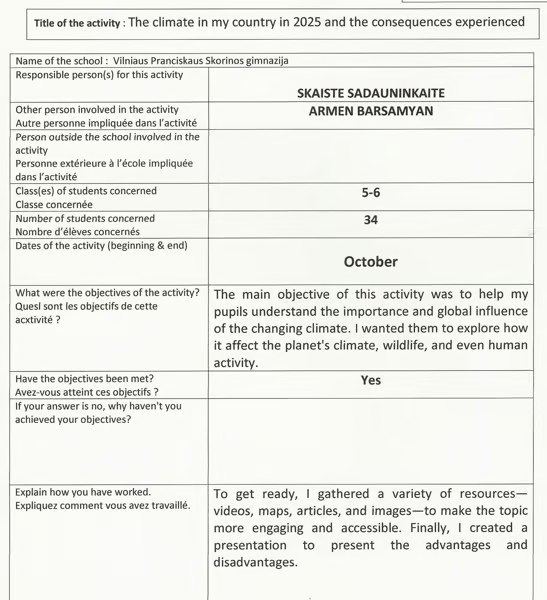
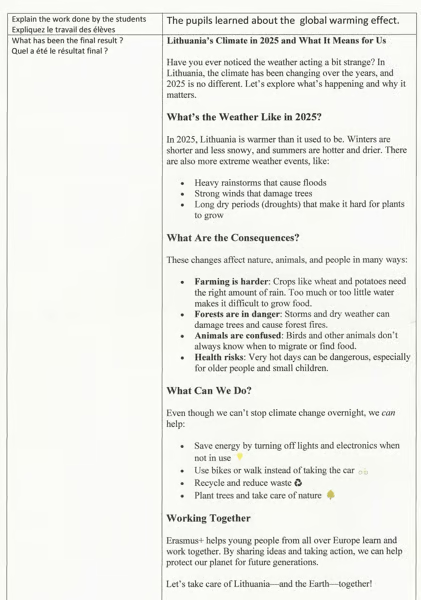
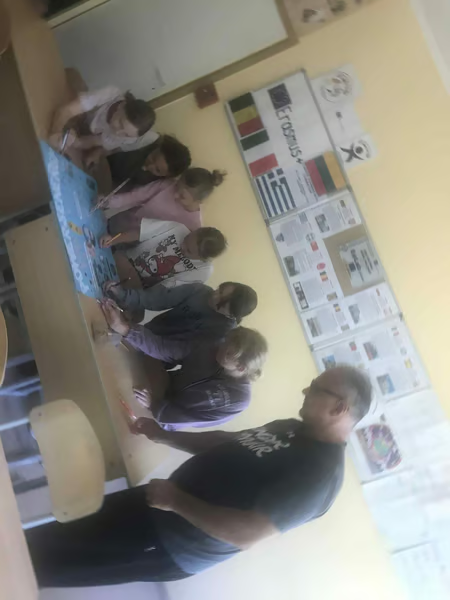
CLIMATE IN MY COUNTRY & CONSEQUENCES
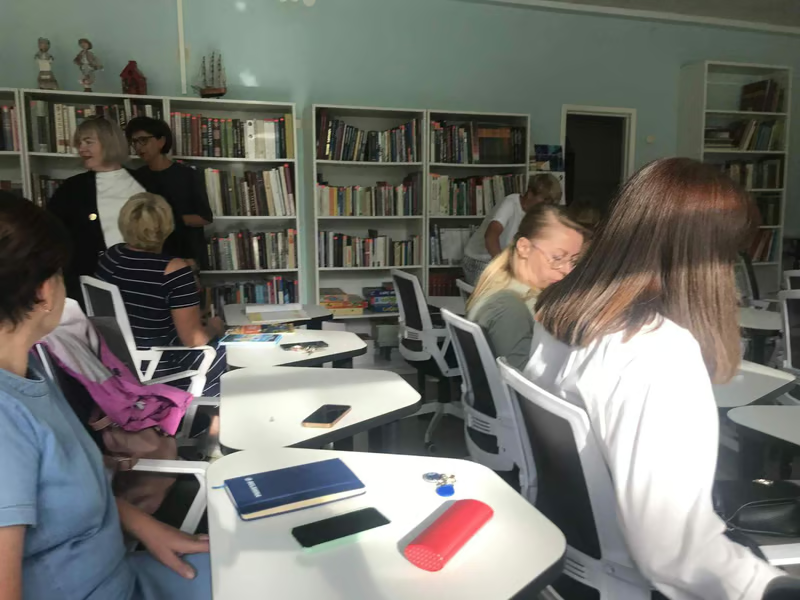
MEETING WITH PARENTS
|
Name of the school : Vilniaus P. Skorinos gimnazija |
|
|
Responsible person(s) for this activity |
VOLHA IHNATSIK |
|
Other person involved in the activity Autre personne impliquée dans l’activité |
ARMEN BARSAMYAN MARINA KONSTANTINOVA |
|
Person outside the school involved in the activity Personne extérieure à l’école impliquée dans l’activité |
|
|
Class(es) of students concerned Classe concernée |
5-7 |
|
Number of parents concerned Nombre d’élèves concernés |
9 |
|
Dates of the activity (beginning & end) |
September
|
|
What were the objectives of the activity? Quesl sont les objectifs de cette acxtivité ? |
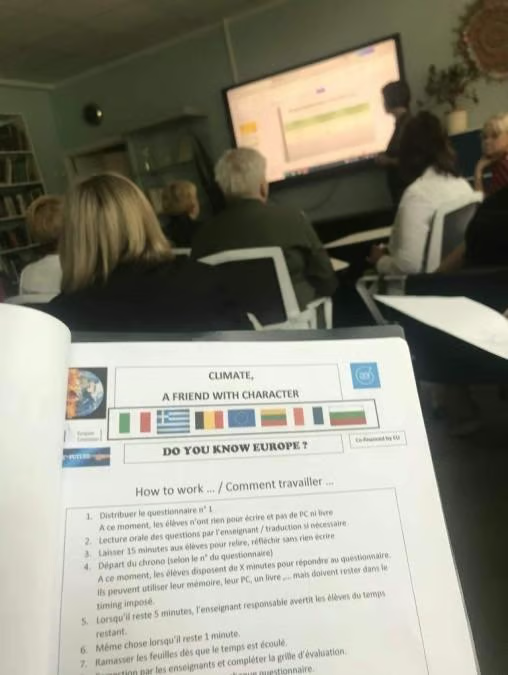
The main objective of this activity was to inform the parents of the LTT meeting in Belgium. I introduced the program and explained that the students will continue exploring how this project affect the planet's climate, wildlife, and even human activity. I also aimed to encourage curiosity about remote parts of the world, and to build awareness of environmental issues. |
|
Have the objectives been met? Avez-vous atteint ces objectifs ? |
Yes |
|
If your answer is no, why haven't you achieved your objectives? |
|
|
Explain how you have worked. Expliquez comment vous avez travaillé. |
To get ready, I gathered a variety of resources—videos, maps, articles, and images—to make the topic more engaging and accessible. I Introduced a presentation with programm meeting in Belgium.
|
|
Explain the work done by the students Expliquez le travail des élèves |
The pupils did some questioneers from quiz how much they know about Europe. They also read about schools and countries which participate in the project. |
|
What has been the final result ? Quel a été le résultat final ? |
By the end of the activity, the pupils were able to explain what EU is. How many countries, capitals and languages in EU. They could describe the climate in different parts of Europe. |
|
I join to this report ….. Je joins à ce rapport |
Video : no
|
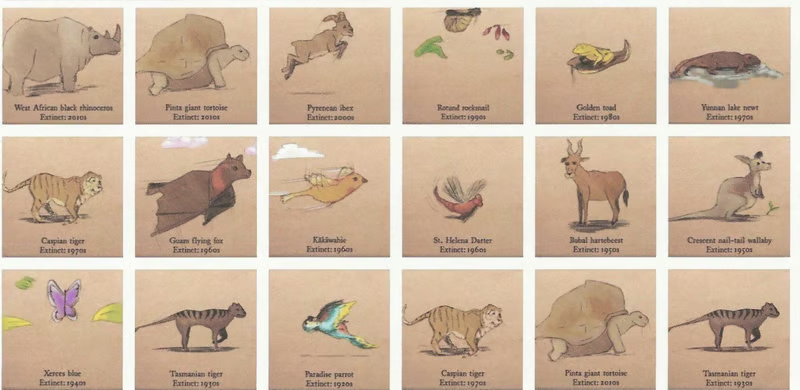
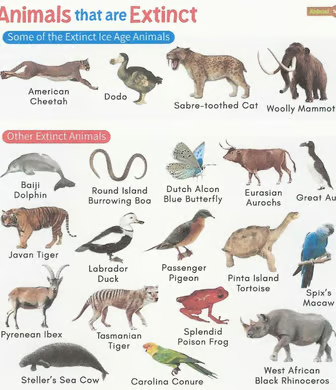
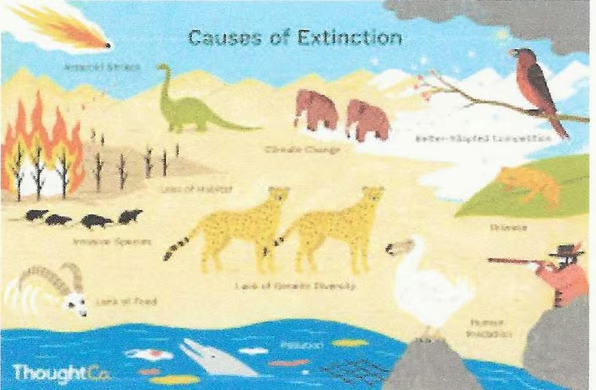
PREHISTORIC AND OTHER ANIMALS THAT BECAME EXTINCT DUE TO CLIMATE OR OTHER CAUSES
|
|
|
|
|
|
|
|
|
|
|
|
|
|
|
|
|
|
|
|
|
|
|
|
|
|
|
|
|
|
|
|
|
|
|
|
https://www.slideshare.net/slideshow/extinct-animals-59791278/59791278
MEETING WITH AN EXPERT IN CLIMATOLOGY
Subject Process
Date October 17-2025
Teachers present Armen Barsamyan
Ihnatsik Volha
Parents present Vinahradova Volha
Maria Konstantinova
Personne externe Ms Stankevič Agata-from Vilnius University
Ms Alana Filon- from Vilnius University
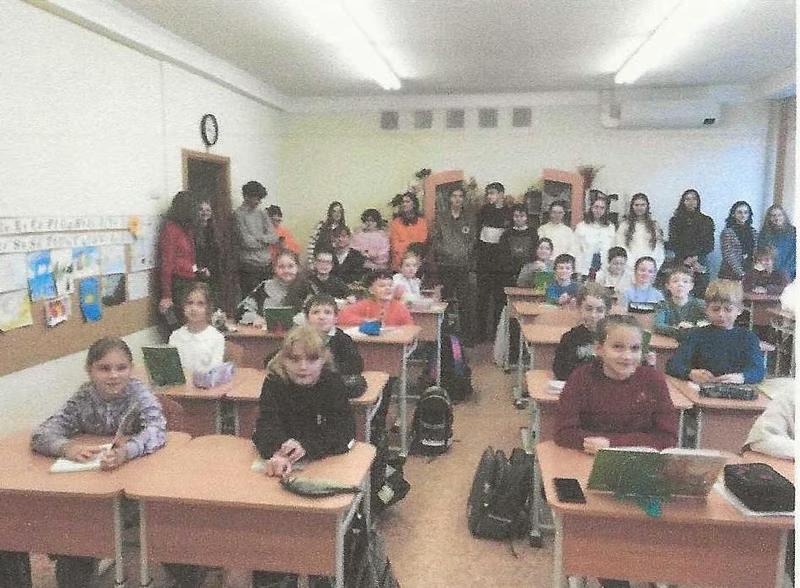
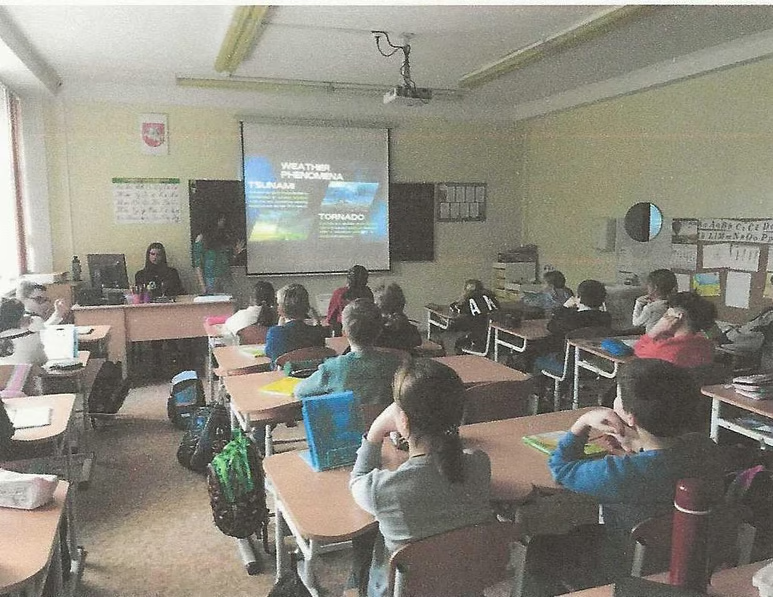
Students present 5th & 8th grades with 57 pupils
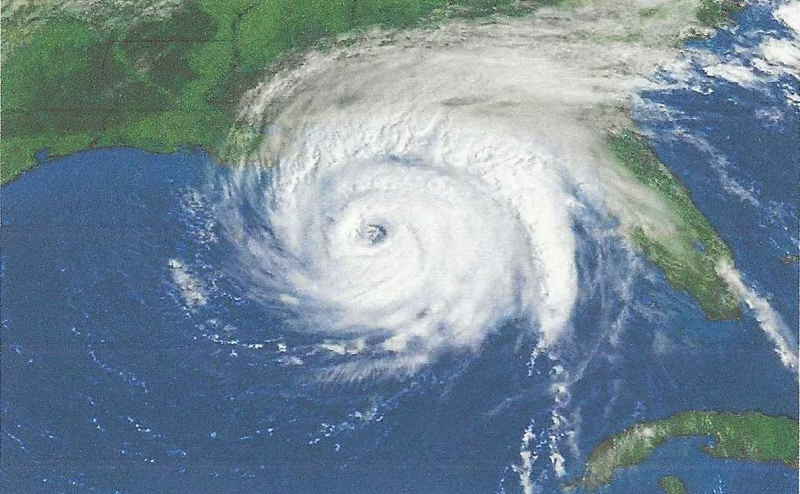
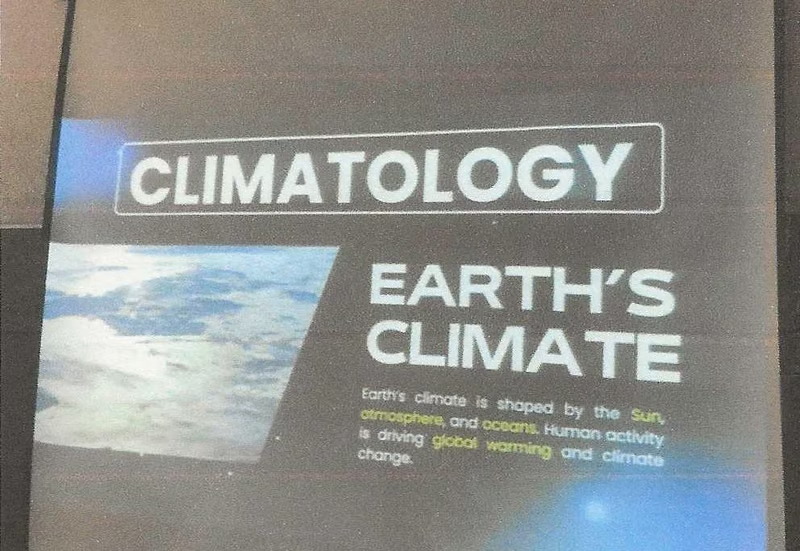
Meeting topic What is a climatology ?
what are the types of climatology ?
Getting to know climatolgy
what are the 6 types of climates ?
Understand how climatologists work
Global warming.
Expert presentations First, there was a video about Climate and weather.
After the experts made a presentation, explaining the difference
between climate and meteorolgy.
Discussed Different what are the types of climatology
Climatology is categorized into types of climates, like tropical, dry,
temperate, continental, and polar, based on the Köppen climate
classification system; and into scientific subdisciplines such as
physical climatology, dynamic climatology, synoptic climatology,
applied climatology, paleoclimatology, and historical climatology,
which focus on specific aspects, methods, or periods of the climate.
Types of Climates
The most common classification system, developed by Wladimir
Köppen, categorizes Earth's climates into five main groups, which
are further divided into sub-types:
• Tropical Climates (A): Warm, humid, and typically found near
the equator.
• Dry Climates (B): Characterized by arid or semi-arid
conditions, receiving very little precipitation.
• Temperate (Mild) Climates (C): Experiences moderate
temperatures with warm, humid summers and mild winters.
• Continental Climates (D): Found in mid-latitudes, they have
warm summers and very cold winters.
• Polar Climates (E): The coldest climates, with average
temperatures often below 10°C (50°F) even in the warmest months.
Types of Climatology
Climatology also has several branches, or types, that focus on
different aspects and methods of studying climate:
• Descriptive Climatology:
Focuses on the characteristics of climate at the Earth's surface, such
as temperature, precipitation, and pressure.
• Synoptic Climatology:
Analyzes dominant atmospheric circulation patterns and patterns of
weather at a given time.
• Physical Climatology:
Studies the energy and mass exchanges that occur within the
atmosphere.
• Dynamic Climatology:
Focuses on atmospheric motion and the exchanges that drive and
result from that motion.
• Applied Climatology:
Uses climatic data to solve specific problems in fields like
agriculture, forestry, and industry.
• Paleoclimatology:
Reconstructs and studies past climates using evidence such as tree
rings and ice cores.
• Historical Climatology:
Focuses on climate in relation to human history over the past few
thousand years.
Many questions were asked by the students:
1.What is climate?
2.What is climate change?
3.What is the evidence that shows the climate is changing?
4.How do we know humans are causing climate change?
5.Why is climate change a serious problem?
6.How does climate change affect my health?
7.How can we reduce the risks we face from climate change?
8.What are the benefits of acting on climate change now?
New knowledge
The explanations given by the expert
Here are the explanations
Question 1:
Climate refers to average weather conditions over many years. For example, the climate in Minnesota is cold and snowy in the winter,
while the climate in Hawai'i is warm and humid all year long. Weather, in contrast, refers to a specific event or condition that
happens over a period of hours or days. For example, a thunderstorm, a snowstorm, and today's temperature all describe weather.
Question 2.
Climate change involves significant changes, over several decades orlonger, in temperature, precipitation, wind patterns, and other aspects
of climate. Weather varies naturally from year to year, so one unusually cold or wet year followed by an unusually warm or dry
year would not be considered a sign of climate change. Climate change involves longer-term trends, such as a gradual shift toward
warmer, wetter, or drier conditions.
Question 3.
Hundreds of independent lines of evidence confirm that our climate is changing. For example, scientists have documented long-term
changes around the world in temperature, precipitation, sea level, and the amount of heat stored in the ocean. Especially dramatic changes
are underway in the Arctic, where warming is amplified by powerful feedbacks. Reductions in sea ice, land-based ice, and snow cover,
along with the thawing of permafrost, are having profound impacts in the Arctic and beyond. Rising sea levels, caused mainly by the
expansion of seawater as it warms, along with billions of tons of water added to the ocean each year from melting glaciers, ice caps,
and ice sheets, are affecting coastal communities in many parts of the world, including places like South Florida, Chesapeake Bay, and
low-lying communities along the Gulf Coast in the United States. Changes in the length of growing seasons and pollen seasons, the
timing of bird migrations, and range shifts in plants and wildlife provide still more evidence for recent changes in climate.
Question 4.
Climate scientists have concluded that humans are largely responsible for the climate change that has occurred since last
century. .Human activities—such as burning fossil fuels for energy, cultivating crops, raising livestock, and clearing forests—are
releasing greenhouse gases into the atmosphere. These greenhouse gases are being emitted faster than forests and the oceans can remove
them, causing them to build up in the atmosphere.
Question 5.
Because it will cause : Increasing heat waves, More extreme weather, Impacts on health, More wildfires, Rising sea levels.
Question 6.
Climate change endangers our health by affecting our food and water sources, the air we breathe, the weather we experience, and our
interactions with the built and natural environments. As the climate continues to change, the risks to human health continue to grow.
Qustion 7.
By making choices that reduce greenhouse gas pollution, and preparing for the changes expected in the future, we can reduce risks
from climate change.
Qustion 8
Economic studies suggest that the longer we wait to act on climate change, the more expensive it will be. There are many technologies
already available, and actions we can take today, that will help us reduce our risks. Many of the actions that we can take to address
climate change will have immediate benefits, such as cleaner, healthier air, as well as significant future climate benefits.
Monitoring at school We will continue talking about climate. will study it at school by asking teachers organise intesubjects lessons.
For example Geography and English, Ethics and Philosophy to deepen the knowlege the students got and refresh this information. The students will draw picturs to show what they understood.
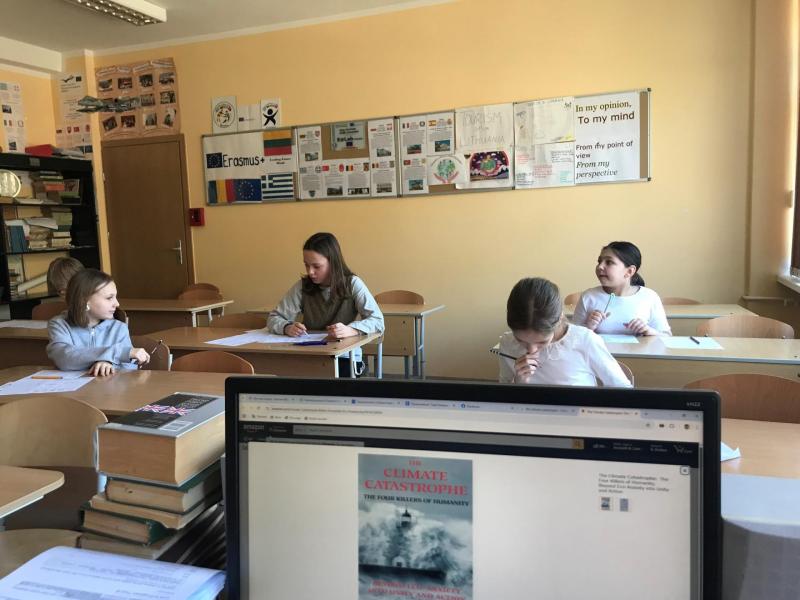
This year we will talk about climatology during English lessons as we have the topic Environmental studies.
BIRDS & INSECTS MIGRATION


https://www.slideshare.net/slideshow/migration-of-insects/70420924
https://www.slideshare.net/slideshow/migration-in-birds-202748313/202748313#2
|
Name of the school : Vilniaus P. Skorinos gimnazija |
|
|
Responsible person(s) for this activity |
ARMEN BARSAMYAN |
|
Other person involved in the activity Autre personne impliquée dans l’activité |
SKAISTE SADAUNINKAITE |
|
Class(es) of students concerned Classe concernée |
5 |
|
Number of students concerned Nombre d’élèves concernés |
21 |
|
Dates of the activity (beginning & end) |
November
|
|
What were the objectives of the activity? Quesl sont les objectifs de cette acxtivité ? |
The main objective of this activity was to help my pupils understand what is the cause of migratory birds. I wanted them to explore on what are the main causes of migration and why so many nirds flying around. I also aimed to encourage curiosity about factors which most influences bird migration. |
|
Have the objectives been met? Avez-vous atteint ces objectifs ? |
Yes |
|
If your answer is no, why haven't you achieved your objectives? |
|
|
Explain how you have worked. Expliquez comment vous avez travaillé. |
To get ready, I gathered a variety of resources—videos, maps, articles, and images—to make the topic more engaging and accessible. I read up on recent news about birds migration, so I could share up-to-date information. I prepared a presentation with interesting facts and information about them and discussion questions to keep the activity interactive. Finally, I created a presentation to present the information.
|
|
Explain the work done by the students Expliquez le travail des élèves |
The pupils learned about the bird migration. They also discovered how the bird migration plays a big role in balancing the Earth’s condition and how climate change is affecting them. Many pupils were surprised to learn about bird migration. Some even expressed concern and interest in doing more to help the environment. Overall, they were engaged and asked thoughtful questions, showing that the topic really sparked their interest. |
|
What has been the final result ? Quel a été le résultat final ? |
There are a number of interlinked reasons likely contributing to “strange” migration patterns of insects and birds seen this year (and broadly in recent years). Some are well documented, others are still being studied. Here are the main factors: Key Drivers of Unusual Migration
Changing temperature regimes shift when and where conditions are suitable for migration, breeding, or feeding. Warmer winters, earlier springs, or delayed winters can upset the timing birds and insects rely on.
· Habitat loss, degradation, and changes in stopover/resting sites
Extreme weather events & unpredictability
Light pollution, electromagnetic interference, and human‐made obstacles
· Reduction in insect populations & food scarcity
· Droughts and water level changes
By the end of the activity, the pupils were able to explain what is bird migration. Overall, the results showed that the pupils not only learned the facts but also became more curious and concerned about the world around them. The activity helped turn a faraway topic into something real and relevant to them. |
|
I join to this report ….. Je joins à ce rapport |
Video : no
|